Beginner-Friendly Techniques for Knitting Cozy Cardigans: A Practical Guide
In the terraced quiet of a workshop, needles click like a quiet metronome guiding a cardigan into existence. This is a beginner’s guide to knitting warm, wearable comfort—cardigans as approachable rituals, built stitch by stitch. Crafted for Cardigan Sweater, a domain that nods to the twin kinship of knitwear and how we dress our everyday selves, this article expands beyond the basics to illuminate the craft, the history, and the small pleasures of making your own sweater. We’ll explore core stitches, gauge wisdom, and the high-road of garment construction, all while tracing three pivotal figures across time who shaped the language of knits—from early modern craft to contemporary design.
Key Theme
Stitches, gauge, and cardigan construction—made accessible.
This article threads practical how-tos with editorial observations—tone inspired by The New Yorker’s clarity and perceptive lens. Expect crisp guidance, historical context, and profiles of three influential figures who left ink or yarn on the world’s fabric. We’ll also pepper in a featured product that embodies the luxury and craft ethos of cardigan knitting: a Pal Twill Scarf, a wearable indulgence that echoes the warmth of cardigans in a refined accessory.
1) Casting On, Knit, and Purl: The Alphabet of Early Technique
Every cardigan begins with a modest act: casting on the live stitches that will become rows, rows, and more rows of fabric. For a beginner, the foundation is less a hurdle and more a doorway—a gateway into the cadence of fabric and the rhythm of your own hands. Casting on creates a secure edge while establishing the gauge that determines the sweater’s size, drape, and warmth.
There are several time-tested cast-on methods, each producing a different edge feel. We’ll start with a simple and forgiving approach—the long-tail cast-on. It’s the one that tends to live in the memory as a reliable entry point, balancing elasticity with a neat edge. Once cast on, the knit (the “6” in K) and purl (the “P”) stitches form the fabric of the cardigan body and sleeves. Mastery of these two stitches unlocks nearly all cardigan construction, from stockinette to ribbing that frames cuffs and hems.
In practical terms, aim for even tension across your stitches. The goal isn’t perfect uniformity but a steady rhythm: a cadence you can sustain through an evening of watching the yarn unwind into a garment you’ll wear for years. The knit stitch yields a smooth face; the purl stitch creates a textured back-and-forth, giving your fabric subtle depth—an undercurrent of personality in wool, cotton, or blends.
2) Choosing Yarn and Gauge: The Fabric’s Mood and Its Bracing Logic
The yarn you choose colors the cardigan’s warmth, weight, and drape. Fiber matters as much as technique. Wool offers warmth and elasticity; cotton provides breathability; blends like alpaca-cotton strike a balance between softness and structure. For beginners, a mid-weight yarn (sport to DK) is forgiving, visible enough to guide your stitches, and versatile for a quick-to-wear cardigan that reads as both cozy and polished.
Gauge, the measurement of stitches per inch, is the quiet framework behind your cardigan’s silhouette. It’s easy to overlook, but when you swatch, you’re giving yourself a map of fit. Knit a small square in stockinette, measure, and compare to your pattern’s gauge. If your gauge runs looser than the pattern, your cardigan will be larger than intended; if tighter, smaller. Swatching is your compass. Treat it as a ritual rather than a chore: a 4x4-inch sandbox where you learn the relationship between needle size, yarn, and fabric behavior.
For cardigan construction, a straightforward gauge often suffices: a 4.5-5.5 mm needle range with a DK to worsted weight yarn. The goal is approachable stitch definition with a fabric that feels comfortable against skin and holds its shape through wear and washing. Swatch with both knit and purl rows, then wash and block the swatch to see how it blooms—this little experiment informs finishing decisions, from edge finishing to overall garment length.
3) Cardigan Construction: The Big-Picture Roadmap
A cardigan is more than a single piece of fabric. It is a small garment that requires thoughtful shaping and joining. A typical beginner-friendly approach divides the cardigan into three main components: the body, the sleeves, and the button band or front edges. You may join pieces at the shoulders or sides, depending on your chosen pattern. The construction plan often looks like this:
- Cast on the body stitches and work the back and then the fronts, possibly in one piece for simpler patterns or as separate pieces for a more modular build.
- Shape armholes and shoulders with gentle decreases and bind off stitches that blend into side seams or shoulder seams.
- Work two sleeves, usually identical in measurement, then sew them into the body’s armholes—careful alignment at caps ensures a smooth shoulder line.
- Finish with a collar, ribbed cuffs, and a hem that echoes the front edges. Add a button band or alternate closure as desired.
- Blocking: the quiet art that gives a cardigan its final, forgiving shape. A damp wash and gentle dry-out can transform a stiff fabric into a drape-friendly garment.
What emerges is a cardigan that is not merely stitched but sculpted—crafted to fit your body’s contours and your routine. This is a gentle, practical exercise in turning yarn into wearable warmth, a daily ritual that rewards patience and care as much as technique.
4) Three Key Individuals from Different Time Periods
Across centuries, three figures stand out for their influence on the language of knitwear, the shaping of garments, and the cultural imagination surrounding cardigans and sweaters. Each represents a horizon in which knitting was not merely a hobby but a language of self-fashioning, community, and craft.
1) Elizabeth Zimmermann (1910–1999)
The Swiss-born American knitting revolutionary
Elizabeth Zimmermann, a cornerstone of modern knitting pedagogy, treated knitting as a democratic craft. Her philosophy—“gauge is king,” and “you are the only pattern”—empowered home knitters to trust their own measurements and instincts. Her books, including Knitting Without Tears and The Opinionated Knitter, established a folklore of confidence: swatch, measure, adapt. For cardigan makers, her approach translates into accessible patterns, flexible construction, and a mindset that holds the knitter at the center of the design process.
2) Lucia di Ballo (late 19th–early 20th century)
A cultural arbiter of late-Victorian knitwear aesthetics
Di Ballo’s circles, though less a household name than Zimmermann, reflect how knitwear traveled through social spaces—from domestic parlors to the hallmarks of refined leisure. Cardigans and sweaters appeared in serialized magazines and illustrated patterns, translating regional techniques into a shared wardrobe vocabulary. The cardigan, in her milieu, was not just warmth but a symbol of measured elegance, a bridge between homecraft and social display. Her era reminds us that knitwear often operates at the junction of function and ceremonial presentation.
3) Rei Kawakubo (born 1942)
Avant-garde designer shaping the cardigan as sculpture
Rei Kawakubo, one of fashion’s most storied provocateurs, reimagined the cardigan as a canvas for architecture, volume, and subversion. Her work with Comme des Garçons collapsed conventional shapes, inviting knitters to explore drape, silhouette, and the politics of proportion. The cardigan becomes a manifesto—an object where warmth meets radical design. For the modern knitter, Kawakubo’s ethos is a reminder that technique can be a route to experimentation, where even a humble cardigan can become an icon of form and idea.
5) A Product Spotlight: Pal Twill Scarf
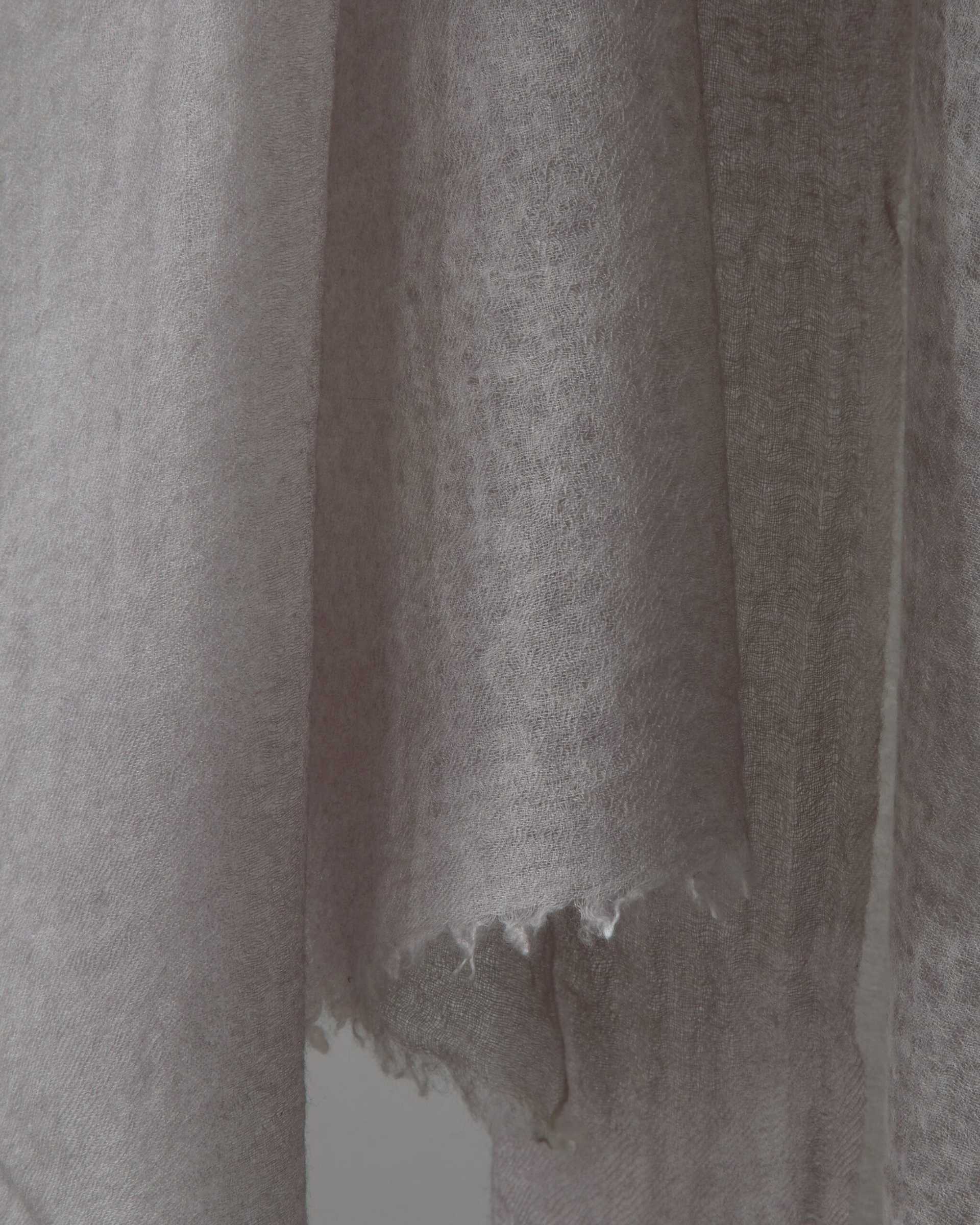
The Pal Twill Scarf is an emblem of the tactile luxury that threads through Cardigan Sweater’s universe. Though it is an accessory rather than a garment, its narrative echoes the cardigan’s ethos: refined warmth, meticulous craftsmanship, and a patina of everyday elegance. Crafted from 100% cashmere with hand-spray dyeing that yields soft, pastel tones and a subtle felted texture, this scarf demonstrates how garment-dyed finishes can elevate the everyday to ritual-worthy warmth. The scarf’s weight—delicate but substantial enough to wrap around a neckline—parallels the cardigan’s balance of softness and structure.
For readers who linger on texture as a form of storytelling, this accessory offers a tactile counterpoint to cardigan knitting. The Pal Twill Scarf’s garment-dyed finish preserves its delicacy through use, and its drape harmonizes with a cardigan’s own silhouette, creating a complete, seasonless look.
Product Details
- Material: cashmere 100%
- Finish: felted effect from garment-dyeing process
- Weight: 40 g/m2
- Construction: hand-sprayed; garment-dyed
Pricing: 295.00
Care: Washing instructions follow garment care guidelines
6) A Starter Roadmap: Your First 12 Weeks
To translate theory into practice, here is a concise 12-week starter roadmap that blends technique with project goals. Each week builds a layer of skill, culminating in a wearable cardigan you can call your own.
- Week 1–2: Casting on, knit and purl practice, and establishing a consistent gauge swatch. Create a simple cardigan back in stockinette that measures 4x4 inches as your baseline.
- Week 3–4: Practice ribbing and edge finishing. Cast on for the fronts, knitting one to two inches of ribbed edge that will become the cardigan’s front bands and cuffs.
- Week 5–6: Begin shaping the body. Learn armhole decreases and how to maintain even stitches across increases and decreases.
- Week 7–8: Work the sleeves. Choose a straightforward cap shaping for the sleeve head and a simple cap to ensure a snug, proportionate look.
- Week 9–10: Assemble pieces. Practice mattress stitch seams and consider a minimal seaming approach for a clean, contemporary finish.
- Week 11–12: Blocking, final fit adjustments, and button choice. Complete with button loops or a subtle front closure and ensure even drape.
7) Closing Reflections
In the quiet logic of a cardigan’s construction, there is more than skill. There is a patient ritual of choosing fiber, mapping gauge, and shaping stitches into a garment that fits not just the body but the day. The cardigan is a shelter and a declaration—a way to knit warmth into a life that often moves faster than our hands can keep up with. The craft invites us to slow down, to measure, to swatch, and to trust our instincts about what we wear next to our skin.
As a practical guide for beginners, this article has walked you through the basic stitches, the importance of gauge, and the architecture of cardigan construction. It has also offered a lens on knitwear history through three time-spanning figures, a nod to contemporary design, and a product that embodies luxury craft. If you’re ready, the next step is to gather your yarn, select a cardigan pattern that speaks to you, and begin—the needles poised like a quiet heartbeat, ready to tell your story in wool.
Would you like a detailed content roadmap or a starter library of patterns and video topics tailored to Direction A? I can draft a plan that scales from foundational tutorials to a curated pattern archive, with consideration for licensing and long-term site growth.
Product Spotlight Visuals
Images provided in this section reflect the Pal Twill Scarf as a complementary luxury to cardigan crafting. The scarf exemplifies the tactile, refined finish that accompanies cardigan culture—soft, versatile, and built for everyday wear. To honor your reading experience, we present the product image below.