Clothing and Accessories
Choosing a Soft Layer for Relaxed Days
The best layer for a quiet day is one you stop noticing: warm enough to be useful, easy enough to move in, and soft in a way that makes the room seem a little more hospitable.
There is a particular domestic hour when a sweater begins to feel like too much. It may be late morning, with a window cracked open against the first suggestion of spring, or early evening, when the house has cooled but the day has not quite ended. One wants warmth, though not necessarily a full outfit; comfort, though not the woolly encumbrance of winter. This is the territory of the soft layer: a cardigan, a loose pullover, a robe, or something draped close at hand for the interval between one temperature and another.
Choosing one can seem almost too simple to require thought. But the small decisions matter. A fabric that feels lovely in the shop may itch after an hour. A generous silhouette may prove cumbersome when reaching for a mug or leaning over a desk. A warm garment can be excellent in January and useless in a heated room. The useful question is not merely whether a layer is soft, but whether its softness, fit, weight, and care requirements suit the way a person actually spends a relaxed day.
Begin with the feeling, then check the fiber
Softness is not a single quality. It may mean a smooth surface, a fuzzy halo, a supple drape, or the reassuring heft of a knit that settles around the body. These sensations come from both fiber and construction. Cotton tends to feel breathable and comparatively smooth; wool can feel springy and insulating; alpaca blends may offer a soft, lightly fuzzy surface and warmth without the dense weight of some heavy knits. A garment’s yarn, stitch, and finishing all shape the final experience, so fiber labels are useful clues rather than complete descriptions.
For clothing worn directly against the skin, personal sensitivity deserves a place in the decision. Some people find wool perfectly comfortable; others notice even a fine fiber at the neck or wrist. If you are uncertain, consider where the garment will touch, whether you will wear a base layer beneath it, and whether a return or exchange policy gives you room to test it at home. A soft scarf or collar can make a difference, but it is better not to assume an irritating fabric will become agreeable through optimism.
Breathability matters just as much as initial softness. A layer that traps heat can be pleasant when you first pull it on and uncomfortable once you begin moving. Cotton and cotton blends are often appealing for indoor use because they can feel less insulating than a dense wool knit. Wool, meanwhile, can be useful when a room is cool or when you want warmth without piling on several garments. Neither fiber is universally superior. The right choice depends on the weather, the room, and the wearer’s own thermostat, which is notoriously difficult to negotiate with.
Read the care label before falling in love. A delicate sweater that needs careful hand-washing may be a good choice for someone who enjoys tending to garments; it may be a poor one for a person who wants to toss everything into a routine laundry load. Machine-washable fabric is convenient, but it still benefits from attention to the recommended cycle and drying instructions. Heat, friction, and hurried handling can change the texture or shape of a knit. Care is not an afterthought: it is part of the garment’s everyday character.
Fit should leave room for the day
A relaxed layer should allow ordinary movement without turning into a tent. Think about the gestures that make up a day at home: sitting at a table, reaching overhead, carrying laundry, walking outside to collect a delivery, or settling into a chair with a book. Sleeves that slide past the hands may be cozy but inconvenient around a sink or keyboard. A shoulder that is too narrow can pull when the arms move forward. A close-fitting cardigan may be easy to wear under a coat, while a roomier one may feel better over sleepwear or a T-shirt.
Length affects both comfort and versatility. A shorter cardigan can work neatly with high-waisted trousers or a skirt and may be less likely to gather beneath a blanket. A longer layer can cover more of the body and feel especially pleasant in a drafty room, though extra fabric may bunch when sitting. There is no required silhouette for loungewear. The point is to find a shape that suits the body and routine, rather than to confuse “relaxed” with “oversized.”
Closures can change the mood of a garment. Buttons allow a cardigan to be worn open, loosely fastened, or closed against a chill. A wrap shape offers adjustability but may need occasional readjustment. A pullover is uncomplicated and stays put, while an open-front layer is easy to remove when the room warms. Pockets, if present, are more than decoration: they can hold a phone, tissues, or the small objects that seem to migrate around a household. Check their placement and depth, since a pocket that pulls the fabric out of shape may be less useful than it looks.
Try a layer with the clothes you expect to wear beneath it. A sweater that fits well over a thin shirt may bind over pajamas or a heavier top. When shopping online, compare the garment measurements with a piece already in your wardrobe that has the kind of fit you like. Pay particular attention to chest width, sleeve length, and overall length. Size names are only shorthand; measurements are more concrete, even if they cannot quite convey the pleasure of a fabric settling across the shoulders.
Warmth without bulk
The goal of comfortable layering is not to accumulate fabric indiscriminately. It is to make small adjustments as conditions change. A lightweight cardigan over a breathable shirt may be enough for a bright, cool morning. A denser knit can serve in a colder room or during a spell of stillness. A scarf or blanket within reach can offer extra warmth without requiring a person to commit to a heavier garment all day.
Consider the space as carefully as the season. A home with steady heating calls for different layers from a drafty older building, and a person who moves between a warm kitchen and a cool study may prefer something easy to open or take off. The same is true of daily activity. Sitting still for an hour generally feels colder than moving around, even in the same room. A versatile layer is one that responds to these shifts without making every change feel like a wardrobe decision.
Layering works best when the pieces cooperate. A smooth cotton shirt beneath a knit is less likely to create friction than a bulky or heavily textured top. A cardigan can slide under a coat more easily if its sleeves are not already thick. If the outer layer is meant for indoors, it need not be engineered for every possible outing; still, it is useful to imagine whether it can accompany a quick walk or a trip to the mailbox. Versatility is not a demand that one garment do everything. It is simply the pleasure of discovering that it does more than one thing well.
Soft layers are not always clothes
On a truly unhurried day, the border between clothing and home textiles becomes pleasantly porous. A throw across the lap can provide warmth while leaving the arms free; one draped over the shoulders can serve as a temporary wrap while a person reads, knits, or watches the light change. It is not a substitute for a well-fitting cardigan, and it is not designed for walking about the house. But for seated comfort, a breathable, soft throw can be a useful companion to loungewear.
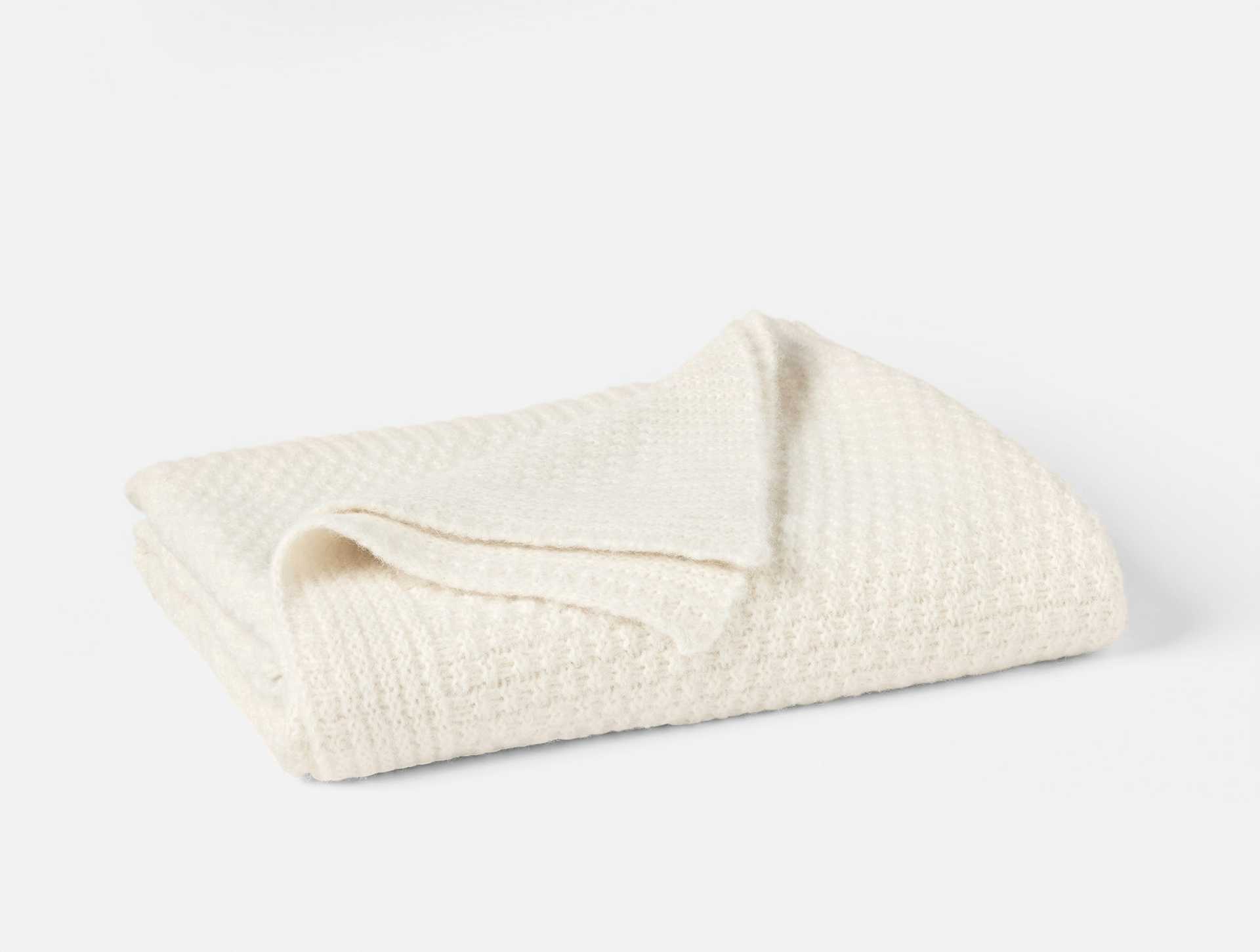
The Casa Loma Organic Knit Throw, for example, is made from 100% organic cotton in a fishbone stitch. Its stated dimensions are 50 by 70 inches, and its breathable cotton construction makes it a plausible choice for a lap or shoulder layer at home. The throw is GOTS certified, and its care instructions call for a cold, gentle wash with like colors, followed by low tumble drying. Those details matter if the idea is to keep a soft layer close at hand rather than reserve it for display.
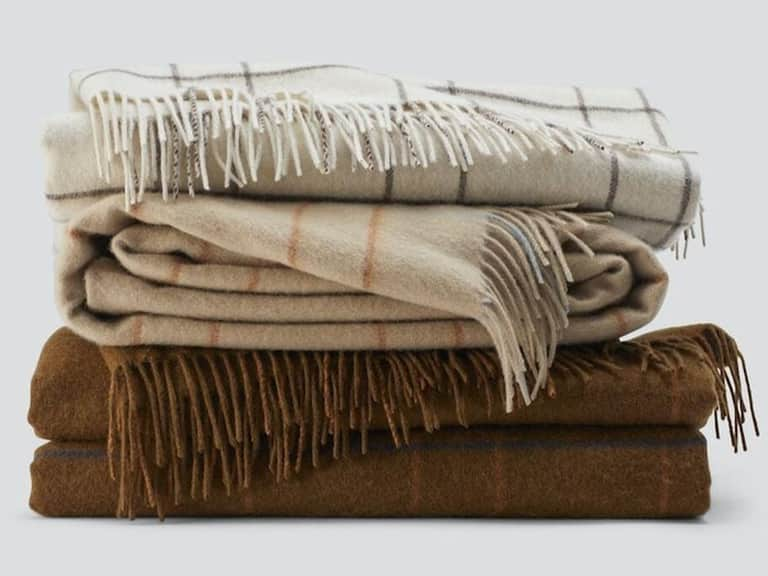
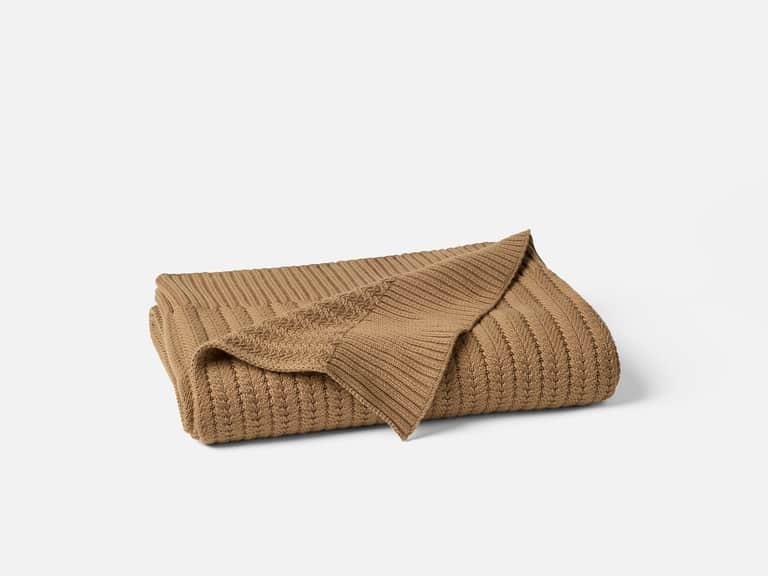
For a warmer, more textured option, the Cordillera Alpaca Cotton Knit Throw combines 56% alpaca with 44% Pima cotton in a seed-stitch knit. The blend is described as offering lightweight warmth, while the cotton contributes breathability. It is dry-clean-only, a practical consideration for anyone who expects frequent use. The Pinstripe Plaid Throw, made from 100% wool, is another home layer with a sweater-soft feel. It can bring warmth to a chair or sofa, though, like any throw, it should be understood as a textile for resting rather than a garment meant to stay in place through movement.
These choices illustrate a useful distinction: a soft layer can be selected for a particular posture as well as for a particular climate. Clothing accompanies movement; a throw makes stillness more comfortable. Some days ask for a cardigan with pockets, other days for a blanket over the knees. Knowing which kind of comfort you want can prevent the common error of expecting a single object to solve every domestic chill.
Color, texture, and the room around you
A loungewear layer lives in close company with its surroundings. It may hang over a chair, rest on the end of a bed, or become part of the daily landscape of a sofa. Color and texture therefore have a practical dimension. Neutrals tend to combine easily with existing clothes and furnishings, while a strong color or pattern can make a familiar outfit feel more intentional. A textured knit adds interest without requiring a complicated silhouette; a smooth surface can feel calmer and slip more readily beneath outerwear.
Choose according to what you will enjoy seeing and wearing, not according to an abstract rule about what a wardrobe ought to contain. A pale garment may show marks more readily; a dark one may collect lint. A raised knit may be more vulnerable to snagging on jewelry or rough surfaces. These are not reasons to avoid particular colors or textures, only reminders that visual appeal and daily use are intertwined. A layer that looks good in a drawer but feels too precious to wear has not quite fulfilled its purpose.
A short checklist before choosing
- Where will you wear it? A cool bedroom, a heated living room, and quick trips outdoors call for different weights and shapes.
- What will it touch? If a garment sits against bare skin, consider fiber sensitivity, seams, cuffs, and the feel around the neck.
- Can you move comfortably? Test the reach, sleeve length, shoulder fit, and ease of sitting—not just the appearance while standing.
- Does the care routine suit you? Check whether it can be washed at home and follow the instructions for drying and storage.
- How will you layer it? Try it over the shirts or sleepwear you actually use, and consider whether it fits beneath a coat if needed.
- Is it clothing or a home textile? A cardigan is made to move with you; a throw is often better for warmth while sitting still.
The pleasure of getting it right
There is no grand theory of the perfect soft layer, though the search can acquire the gravity of one when a person is cold, tired, or trying to make a room feel more comfortable. The answer is usually modest: fabric that feels good for more than the first minute, a fit that allows ordinary movement, and enough warmth for the circumstances without a surplus of bulk. Care instructions should be realistic, and the layer should have a role in a wardrobe or home that is easy to imagine.
It is worth resisting the pressure to make comfort look a certain way. Relaxed clothing need not be shapeless, and a useful layer need not be expensive or elaborate. A cotton cardigan, a familiar wool knit, or a carefully chosen blanket can each answer a different need. The best choice is the one that meets you where you are: by the window in the morning, at the desk through a long afternoon, or on the sofa at the hour when the house begins to cool.
In the end, softness is less a luxury than a form of attention. It asks you to notice how a sleeve sits, whether a fabric breathes, how much warmth is enough, and what kind of comfort the day requires. Get those details right, and the layer recedes into the background—as good companions often do—leaving only the welcome impression that you are exactly as warm as you meant to be.